What to buy in marrakech and what Locals Actually Pay

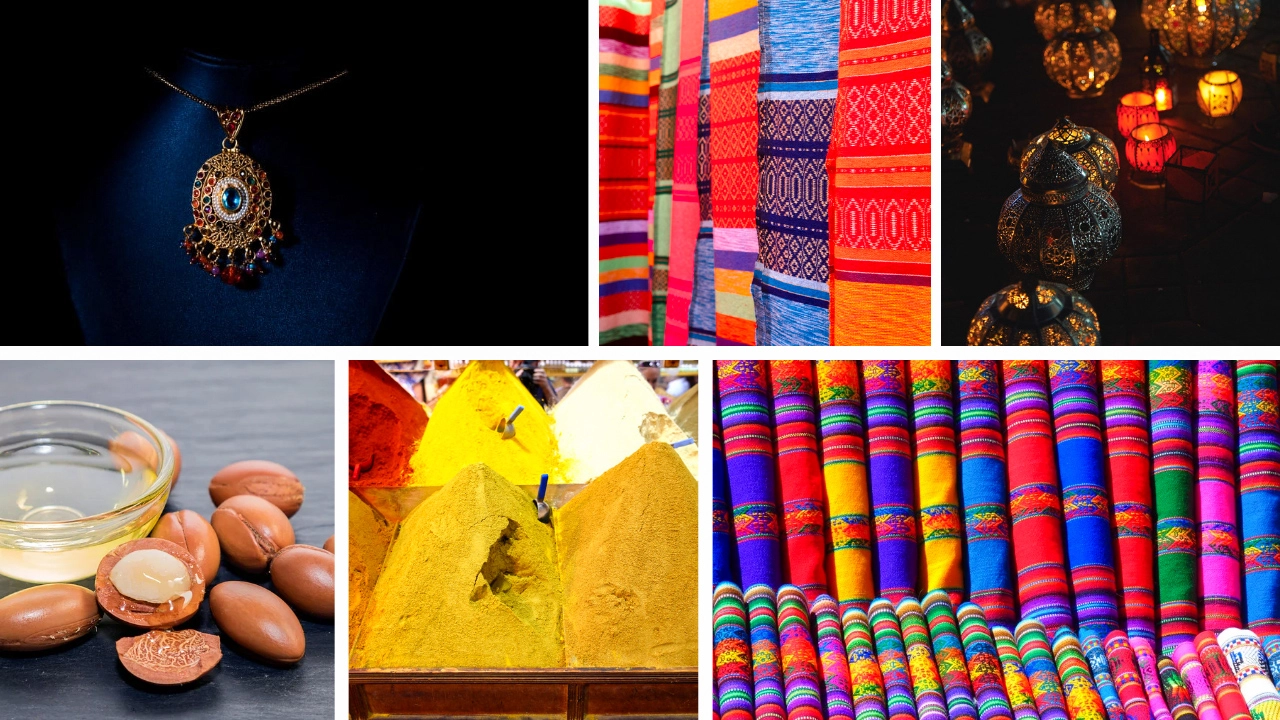
If you’re heading to Marrakech, shopping in the souks can feel exciting, confusing, and a little overwhelming all at once.
The good news is that with a few local price references and a calm bargaining mindset, you can walk away with beautiful handmade pieces without overpaying.
As someone who has spent years moving through these markets, I want this guide to do one simple thing: help you recognize real value.
From rugs and leather to spices, oil, jewelry, and lanterns, you’ll find what to buy, what a fair price looks like, and when it’s better to walk away.
✦Hate Haggling in the Souks?
There is a secret, government-approved complex in Marrakech that offers authentic traditional crafts at fixed, reasonable prices with zero bargaining. Drop your email below to unlock its exact location in our free guide instantly!
Berber Rugs
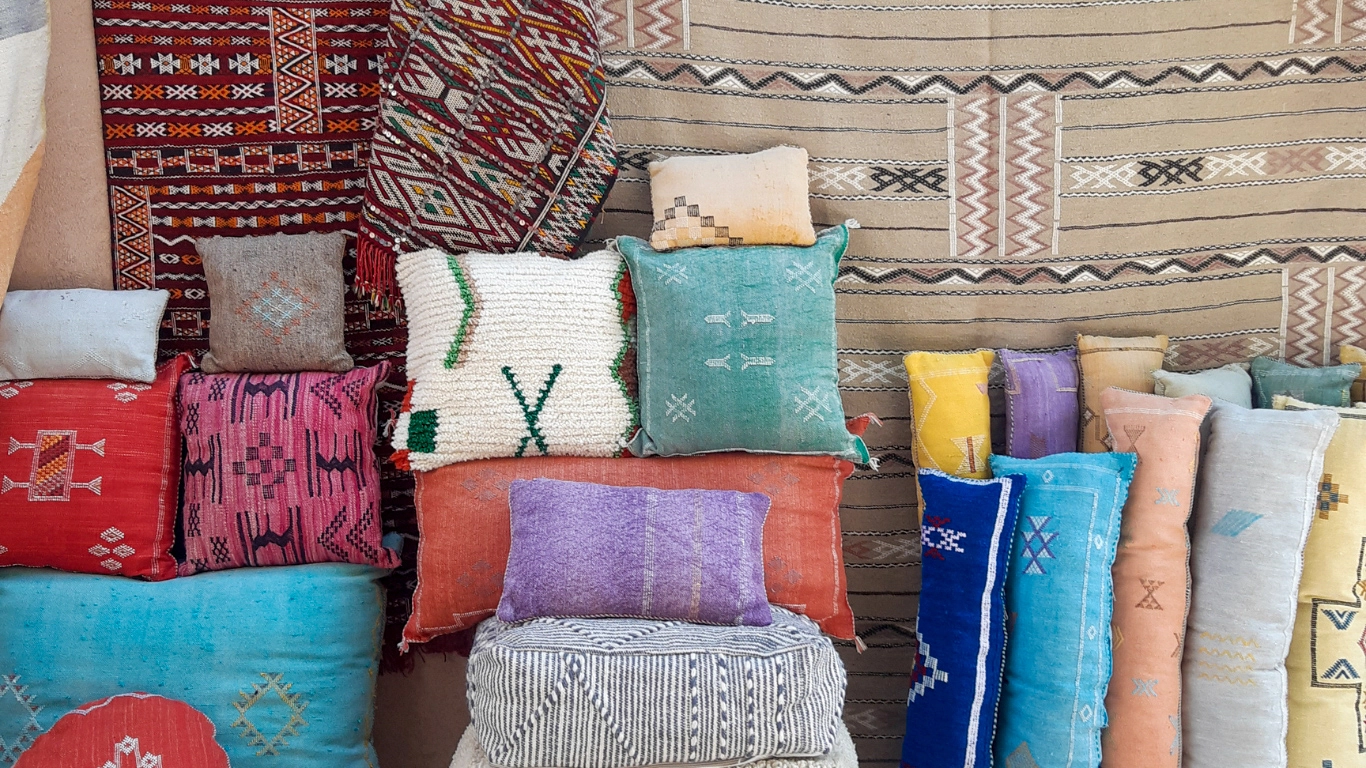
If there’s one thing that truly brings a Marrakech home to life, it’s a Berber rug. More than just something beautiful to put on the floor, these rugs carry the soul of Amazigh craftsmanship — woven by hand, full of character, and rich with patterns that often tell a story.
They are the kind of piece that doesn’t just decorate a space, but gives it warmth, history, and meaning.
⭐Fair Starting Price: 1,500 – 4,000 MAD ($150 – $400) depending on size
⭐Do Not Exceed (Max): 6,000 MAD ($600) for medium-to-large standard wool
💡Local Insider Tip: Never buy a rug on your very first day or from the first shop you enter. Take photos of the ones you like, and tell the seller you need to measure your room back home. Also, if a guide or taxi driver walked you into the shop, leave immediately—their 20-30% hidden commission is already added to your rug’s price! Shop alone to get the real local price.
Women’s Jabador
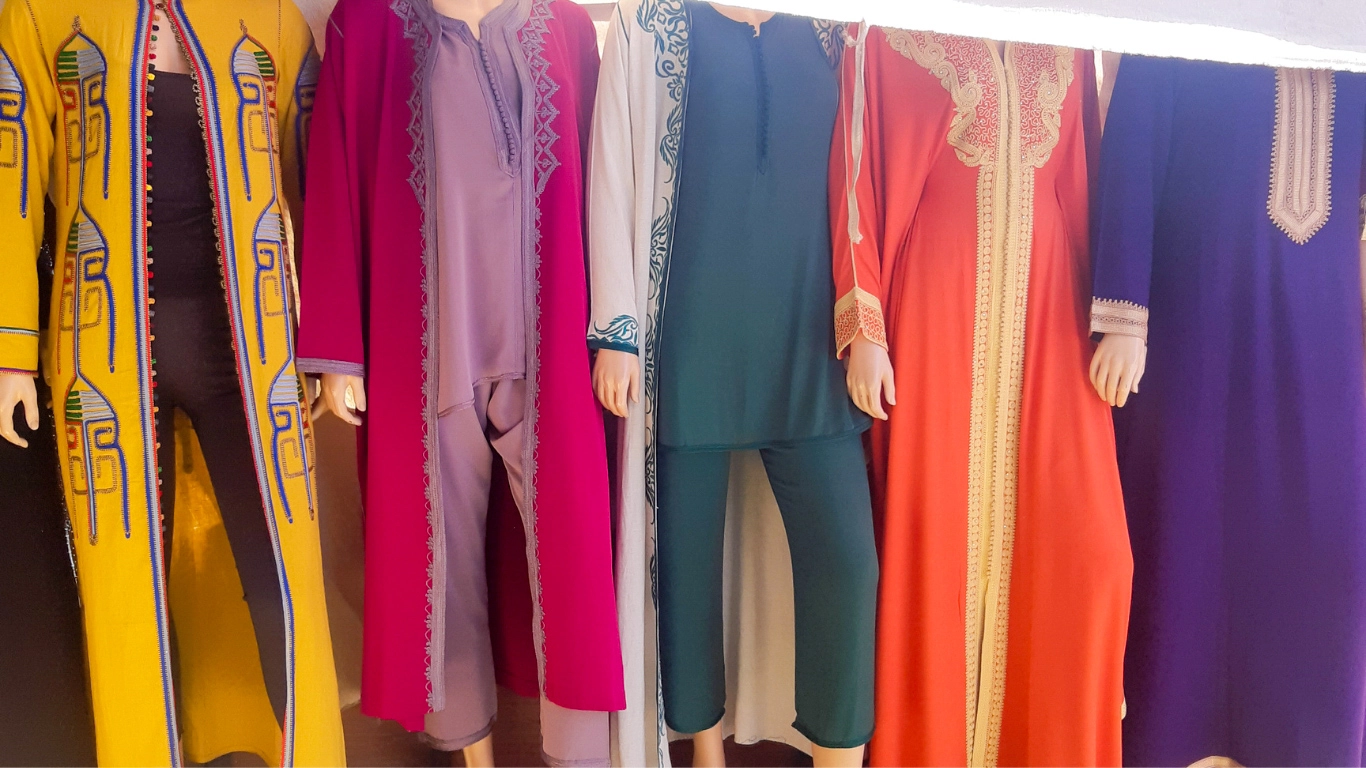
If you’re looking for something that feels elegant but still easy to wear, the women’s jabador is a beautiful Moroccan choice. It’s a traditional outfit made of two matching pieces, usually a long tunic with trousers, often finished with delicate embroidery and soft, comfortable fabric.
What makes it special is that it combines tradition with a more relaxed, modern feel, which is why many women wear it for special occasions, gatherings, or simply when they want something graceful and authentic.
⭐Fair Starting Price: 250 – 450 MAD ($25 – $45) for good ready-made fabric
⭐Do Not Exceed (Max): 600 MAD ($60) unless it is custom high-end silk embroidery
💡Local Insider Tip: Instead of buying ready-made Jabadors in the main tourist plazas, head over to the “Souk des Teinturiers” or small tailoring alleys inside the Medina. If you have 2 or 3 days in the city, you can actually buy your own fabric from a local textile merchant for cheap, and pay a local tailor to stitch a custom one for you!
Berber Jewelry
If you love pieces with history and personality, berber jewelry in Marrakech is one of the most beautiful things to look for. Much of it is inspired by Berber and Tuareg traditions, with silver, symbolic shapes, and stones like coral or amber that give each piece a distinctive character.
What makes it memorable is that it feels less like simple decoration and more like something carrying a story, whether you find it in the souks, the jewelry market, or a small artisan shop.
⭐Fair Starting Price: 30 – 50 MAD ($3 – $5) per gram for genuine silver
⭐Do Not Exceed (Max): 80 MAD ($8) per gram for complex vintage handmade tribal pieces
💡 Local Insider Tip: Many shiny pieces in the open souks are actually made of cheap nickel or “Alpaca silver” (which contains zero real silver). If you want real Berber silver, look for the official government hallmark stamp on the piece, or bring a small magnet with you—pure silver is not magnetic. If it sticks, it’s fake!
Pottery
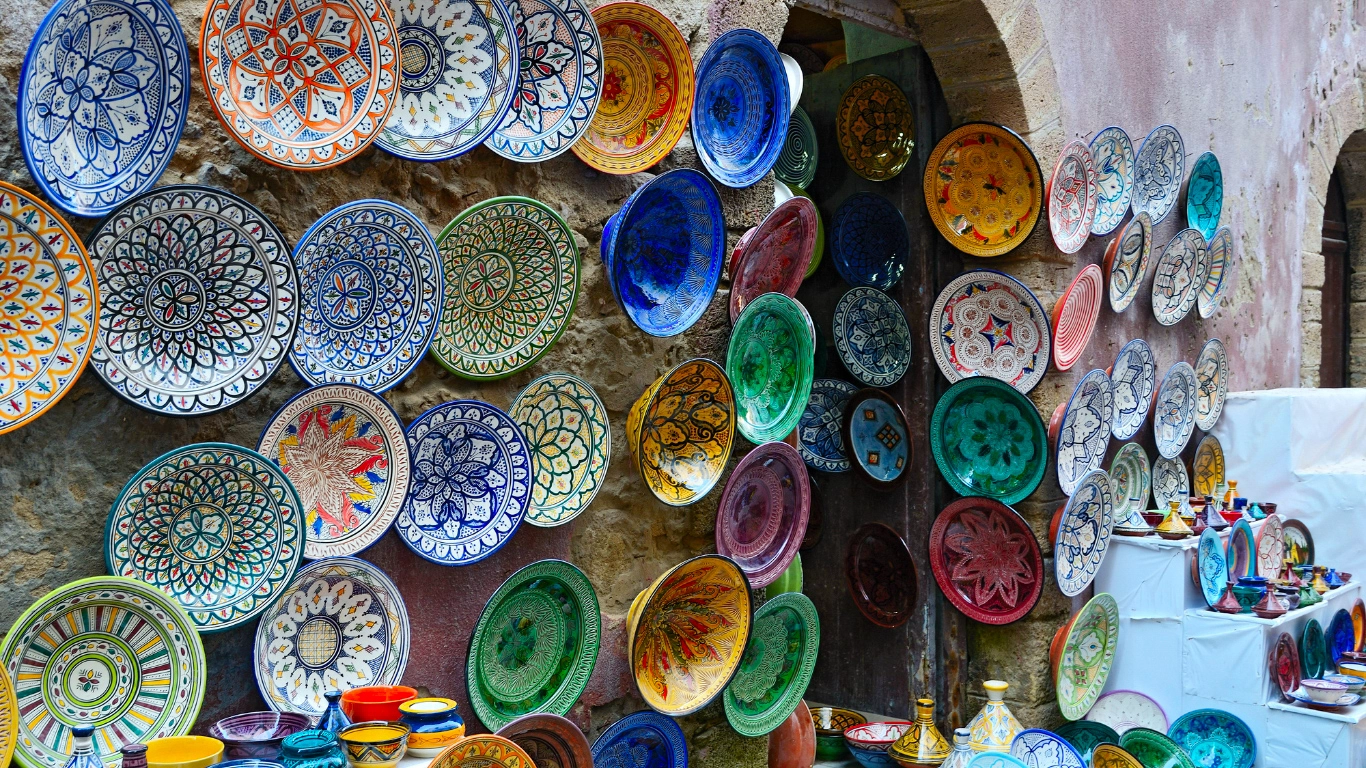
If you want something that feels both practical and beautifully Moroccan, pottery is one of the easiest things to fall in love with. From hand-painted bowls and plates to tagines and decorative ceramics, these pieces bring color, texture, and a little bit of Marrakech into everyday life.
What makes it special is that each piece feels handmade and full of character, with patterns and glazes that reflect the city’s long craft tradition.
⭐Fair Starting Price: 40 – 120 MAD ($4 – $12) for bowls/tagines
⭐Do Not Exceed (Max): 250 MAD ($25) for huge, heavily detailed hand-painted plates
💡Local Insider Tip: If you want to buy heavy pottery or multiple sets, do not buy them inside the cramped Medina souks. Take a short walk to the government-backed Ensemble Artisanal —which is located directly opposite the famous Koutoubia Mosque — Buying directly from the source or fixed-price centers saves you the massive markup and the stress of haggling.
Spices
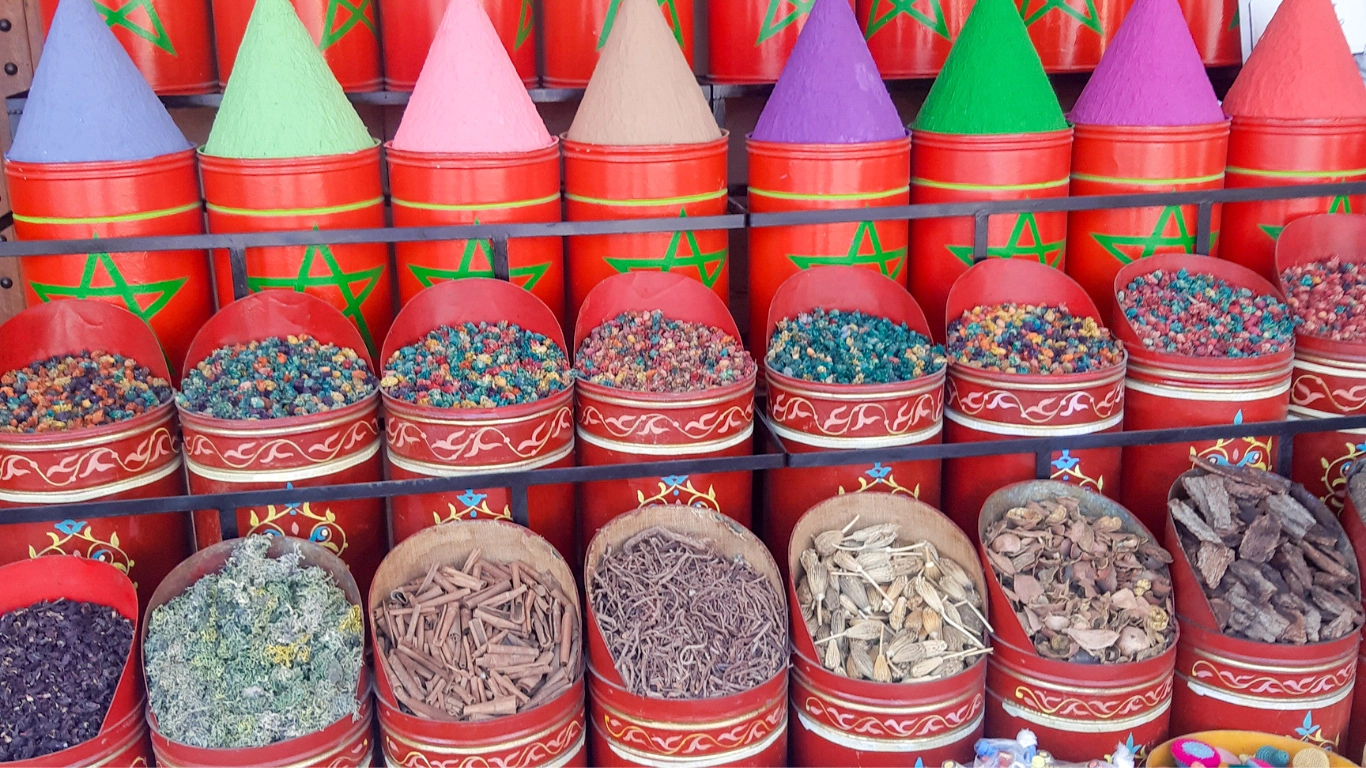
If you follow your nose through the souks, spices are one of the first things that will stop you in your tracks. From saffron and cumin to ras el hanout, these bright, fragrant blends capture the flavor of Marrakech in the most immediate way.
They’re small, easy to carry home, and perfect if you want a souvenir that feels both practical and deeply Moroccan. Argan Oil Story – A Golden Drop from Morocco
⭐Fair Starting Price: 15 – 30 MAD ($1.5 – $3) per 100g (Saffron: 30-40 MAD per gram)
⭐Do Not Exceed (Max): 50 MAD ($5) per 100g for standard blends (Saffron max: 60 MAD/g)
💡Local Insider Tip: Avoid the pre-packaged spice cones set up beautifully for Instagram photos—they are often old, dusty, and lose their flavor. Always ask the spice merchant to grind the spices (like cumin or black pepper) fresh right in front of your eyes. For Saffron, never buy it if it looks incredibly cheap; real Moroccan saffron from Taliouine is expensive, and cheap versions are just dyed corn silk.
Argan Oil
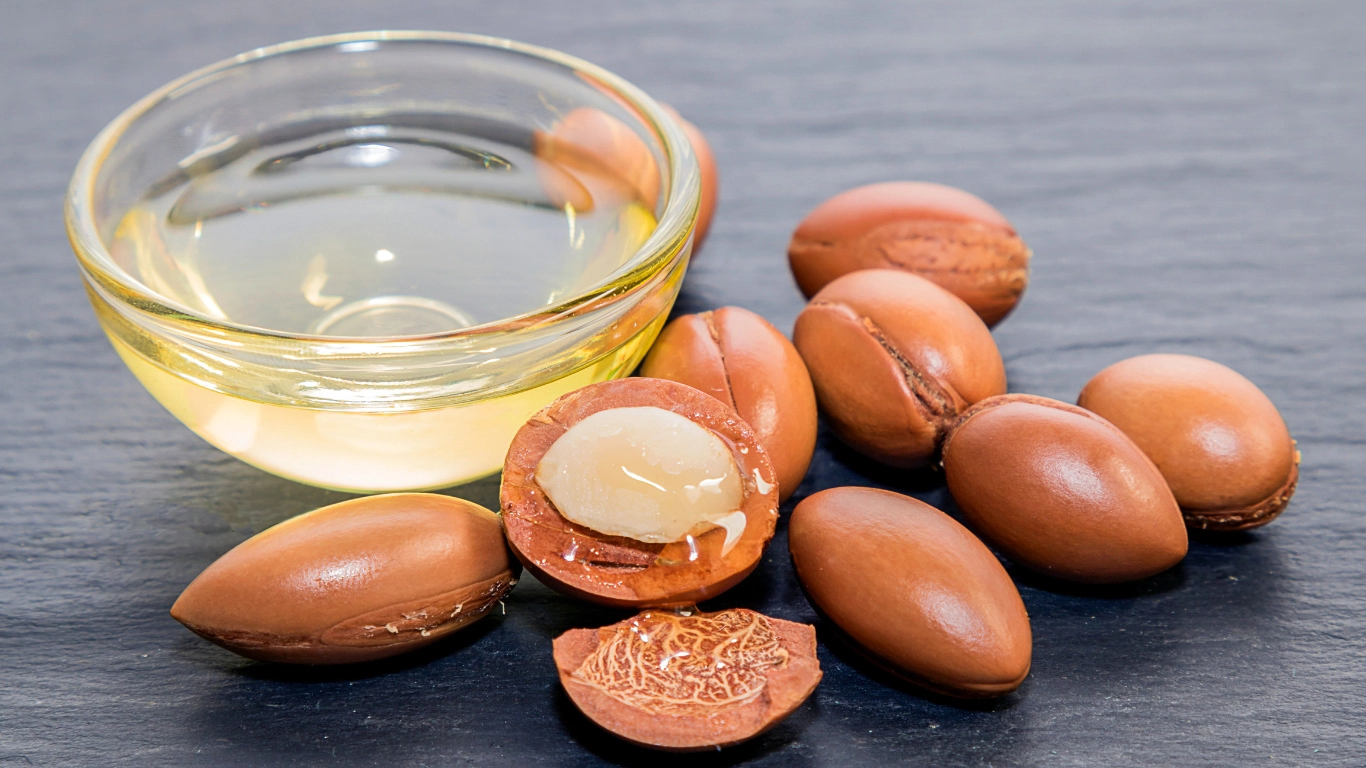
If you want to take home something small but truly Moroccan, argan oil is one of the best picks. Often called liquid gold, it’s known for its nourishing qualities and is sold in Marrakech as a beauty staple for skin and hair.
It’s also a practical souvenir because it’s easy to carry, widely loved, and feels like one of those Marrakech purchases you’ll actually keep using long after the trip.
⭐Fair Starting Price: 150 – 250 MAD ($15 – $25) for a pure 250ml bottle
⭐Do Not Exceed (Max): 350 MAD ($35) per 250ml (if it’s certified organic co-op)
💡Local Insider Tip: True cosmetic argan oil should have a silky texture, absorbs quickly into the skin, and has a very faint, almost unnoticeable nutty scent. If it smells strongly like goat or roasted nuts, it’s either old or meant for cooking! Shake the bottle—if it looks watery or has heavy sediment at the bottom, it has been diluted with cheap vegetable oil. Buy from reputable co-ops or fixed-price shops only.
Leather
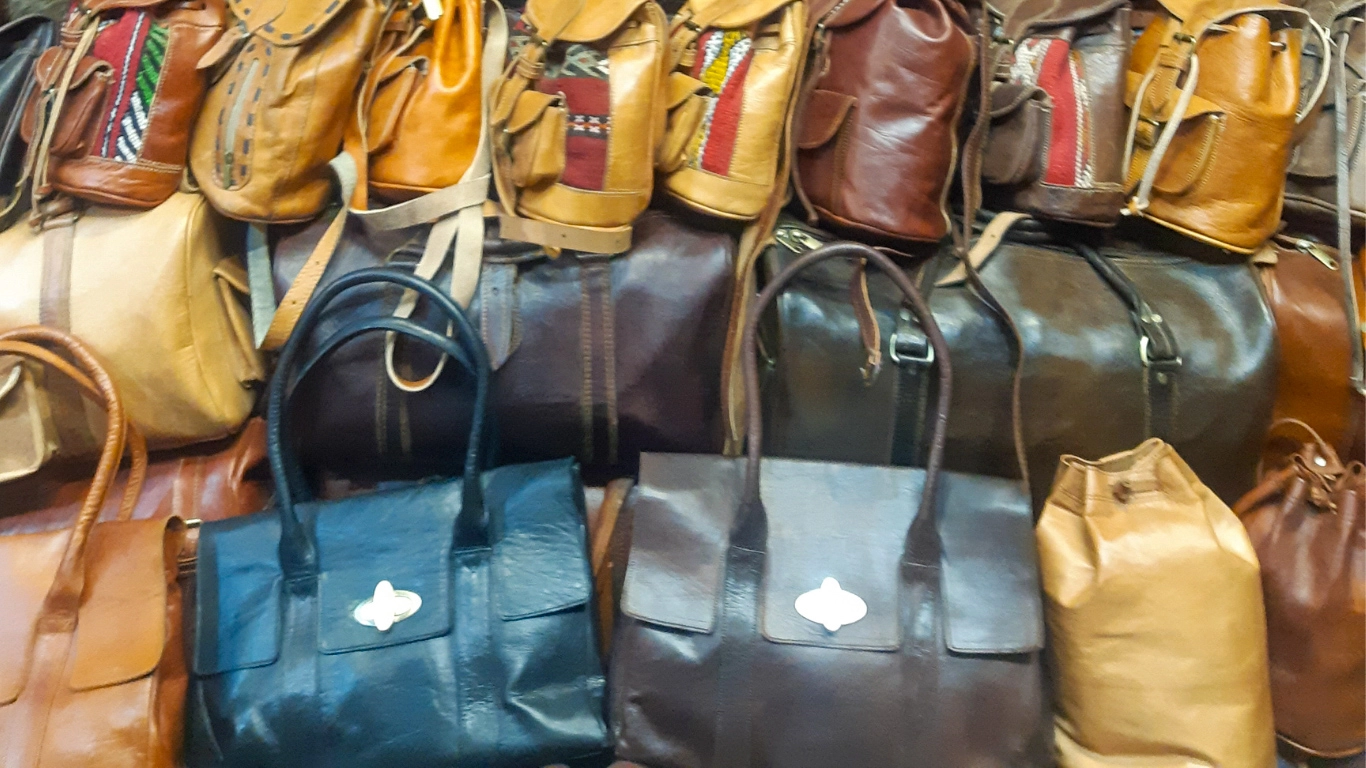
If you want a souvenir that feels both practical and full of character, leather is one of the best things to buy in Marrakech. From soft bags and belts to babouches and jackets, the city’s leatherwork carries a strong handmade tradition and a very local feel.
What makes it special is the craft behind it — leather in Marrakech is still tied to traditional tanning and artisan workshops, so the pieces feel like something real, durable, and worth keeping for years.
⭐Fair Starting Price: 100 – 150 MAD (Babouche) | 250 – 450 MAD (Bags)
⭐Do Not Exceed (Max): 200 MAD for slippers | 650 MAD ($65) for heavy real leather backpacks
💡Local Insider Tip: To test if the leather bag or jacket is real and high-quality, look at the edges and stitching—real Marrakech leather is thick and has a distinct natural smell (though sometimes strong due to traditional tanning). Rub your finger fast on the surface; real leather warms up from friction, while fake synthetic leather stays cold.
Tea – “The Moroccan Whiskey”
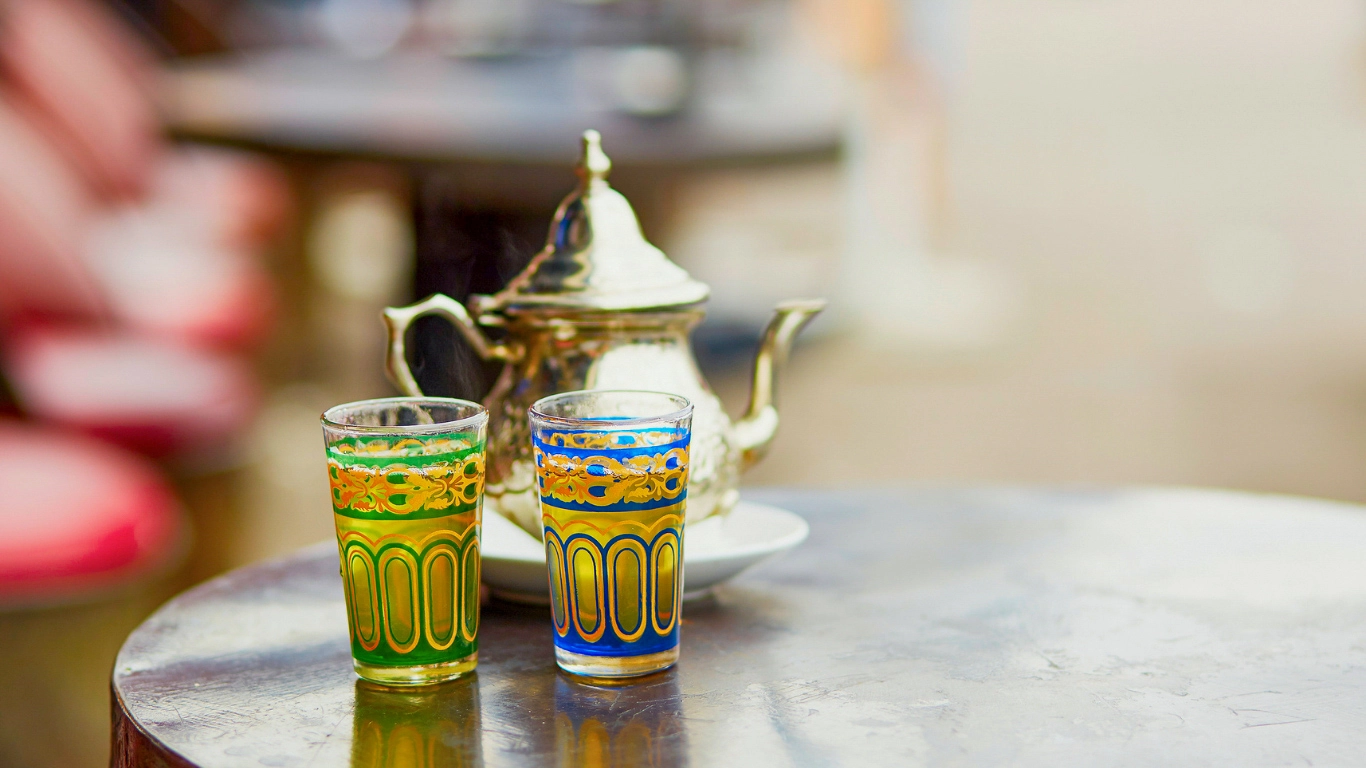
If there’s one drink that instantly feels like Marrakech, it’s mint tea. More than a refreshment, it’s part of daily life and hospitality, and it’s often the first thing you’re offered when you step into a riad or stop for a break in the medina.
It’s warm, sweet, fragrant, and tied to the rhythm of the city, which makes it one of the most memorable things to enjoy — and to bring home in the form of tea, glasses, or a teapot.
⭐Fair Starting Price: 150 – 250 MAD ($15 – $25) for a traditional stainless teapot
⭐Do Not Exceed (Max): 400 MAD ($40) for heavy brass, premium carved large teapots
💡 Local Insider Tip: Do not buy loose tea leaves or gift-wrapped tea blends from touristy herbal shops in the souks—they will easily charge you 5x the real price. Instead, walk into any local grocery store (Hanout) or supermarket and buy standard Moroccan gunpowder green tea (like the famous Sultan brand). It is exactly what we locals drink every day, and it will cost you almost nothing!
Amlou – “The Moroccan Nutella”
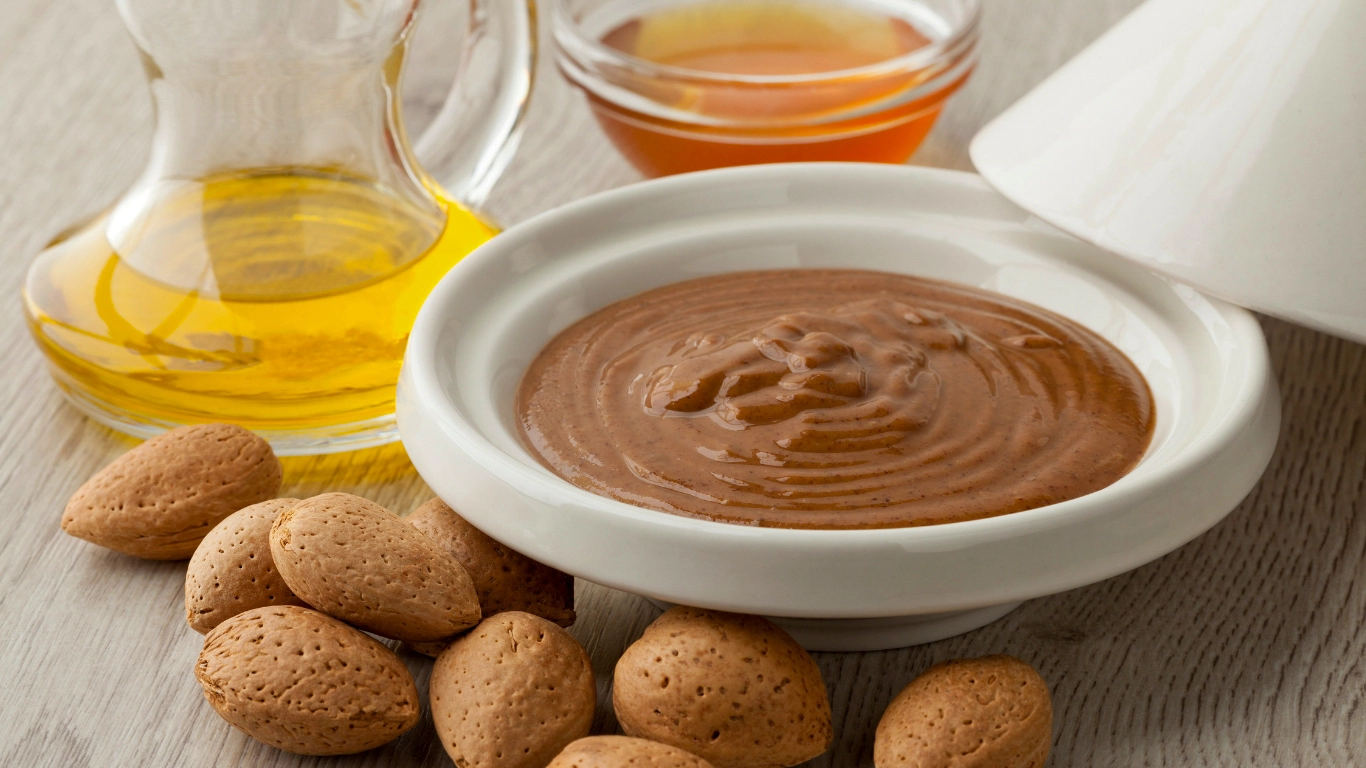
If you want a souvenir that feels tasty, traditional, and very Moroccan, amlou is a great choice. It’s a rich spread made from roasted almonds, honey, and argan oil, and it’s often enjoyed with bread or pancakes at breakfast or tea time.
What makes it special is its smooth, nutty flavor and its deep connection to southern Moroccan food culture, where it is made and sold as a beloved local specialty.
⭐Fair Starting Price: 80 – 130 MAD ($8 – $13) for a standard 500g jar
⭐Do Not Exceed (Max): 180 MAD ($18) per 500g (Ensure it uses real honey, not sugar!)
💡Local Insider Tip: Amlou is nicknamed the “Moroccan Nutella,” but shady sellers often cut corners by replacing expensive pure Argan oil with cheap sunflower oil, and pure honey with sugar syrup. Before buying, stir the jar and taste it—if it’s intensely sweet like candy, it’s fake. Real Amlou has a rich, deep almond flavor with a warm, healthy argan aftertaste.
Lanterns
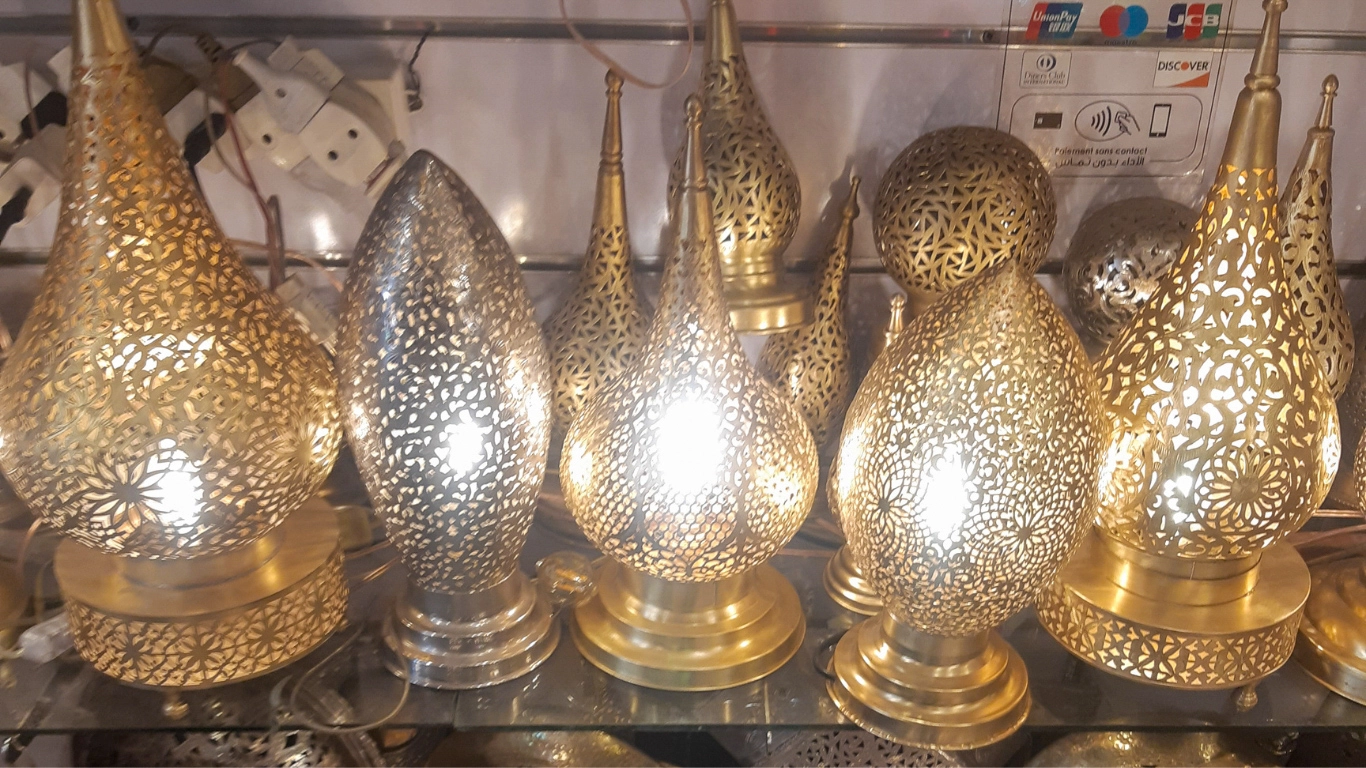
If you want something decorative and instantly recognizable, lanterns are one of Marrakech’s most beautiful finds. Usually made from brass, iron, or glass, they’re hand-crafted to cast patterned light and create that warm Moroccan atmosphere people remember.
They work as both a souvenir and a home décor piece, which makes them especially popular if you want to bring back something that feels artistic and practical at the same time.
⭐Fair Starting Price: 150 – 350 MAD ($15 – $35) for small to medium brass
⭐Do Not Exceed (Max): 700 MAD ($70) for large, intricate hand-carved copper designs
💡Local Insider Tip: Tap the metal with your knuckle or a key before buying. Premium lanterns are made of solid brass or copper, which sounds dull and heavy when tapped. Cheap tourist replicas are made of thin iron sheets sprayed with shiny gold paint—these sound hollow, are very light, and will rust within a year when you take them back home.
Ready to Shop Like a Marrakech Local?
Wrapping up a day in Marrakech souks with bags full of rugs, spices, lanterns, and argan oil feels like stealing a piece of the city’s magic.
You’ve touched history, smelled adventure, and haggled your way to deals that make every item more special.
Whether it’s a Berber rug for your living room, amlou for lazy breakfasts, or jewelry that turns heads, these buys aren’t just souvenirs – they’re memories that light up your everyday life back home.
Follow my tips, trust your senses, and don’t forget the 40-70% bargaining rule from my quick guide.
Grab it now to get all the souk maps, real prices, and insider spots – your Marrakech haul deserves the best start. Happy shopping!